I didn’t exactly grow up with the cultlike devotion to the University of California system shared by so many Californians. |
All my applications to UC schools were rejected, and that left a chip on my shoulder. It was San José State for me. |
San José is a six-hour drive from Los Angeles, a delirious journey through mountain passes and across the Central Valley. I made it scores of times during my college days. It introduced me to the vastness of California, and all the land that divided us. |
If you do enough of those drives, you end up wondering exactly what stitches together this state of 39 million people and 163,000 square miles. |
Joan Didion thought she had one answer: the University of California. |
She marked the 125th anniversary of the institution in 1993 talking about how she grew up in a world where Southern California and Northern California felt completely separate, happy to let the mountain ranges serve as borders. |
“That California doesn’t exist anymore,” she said in an address. “We wrenched ourselves from our provincial Eden into history, and as we did so, some of us kicking and screaming, this university did what it has been doing for 125 years now. It provided the bridge. It provided the forum. It provided the safe house in which old and new California could be seen to be not irreconcilable.” |
I discovered this quote in the new book “California Dreams,” an epic telling of the UC system written by Miriam Pawel. It’s a history filled with drama over free speech, civil rights, utopian ideals, academic rivalries, the military-industrial complex and state budgeting. |
But I found the most fascinating thread to be UC’s quest to conquer California’s sprawling geography and spread the promise of higher education. |
How UC spread across the state |
UC, of course, started with just one university: Berkeley. Regardless of where you lived, you had to come to the East Bay hills. This helped make Berkeley a world-class university. But by the turn of the century, Southern California was booming and leaders demanded a campus of their own. Berkeley forces resisted, arguing a second campus would dilute UC’s prestige. |
So commenced the Battle of Westwood, which centered on the balance of exclusivity and accessibility. Los Angeles forces eventually won, and it set a game-changing precedent. |
After World War II, California was suddenly ascendant, and one of its proudest achievements was bringing UC deep into the state. San Diego. Irvine. Riverside. Santa Barbara. Santa Cruz. |
The world marveled at how California could afford to build so many campuses so quickly. It created a behemoth that managed to educate record numbers of students, drive cutting-edge research and serve the needs of the Cold War-era federal government and military. |
It was great while it lasted. |
The money started drying up in the 1960s, just as the politics shifted right and students started rebelling against the increasingly complicated, entrepreneurial system that UC architect Clark Kerr infamously called the “multiversity.” |
How new campuses transformed the state |
Pawel makes a strong case for how much the spreading out of the UC across the state transformed California. |
By placing universities near growing population centers, UC became integral to the local economies and visa versa. Each university brought its own homegrown innovation — Davis in agriculture, San Diego in biotech, UCLA and Berkeley in computers, medicine and science. The new campuses also opened up the university experience to a diversity of students — not just elites like Didion, whose prosperous Sacramento family all attended Berkeley and thought it as “our birthright.” |
It’s easy to look back on the magic mid-century UC system as the golden age. In recent decades, it’s been at the center of so much political debate. UC tuitions have soared. The admissions process is a topic of never-ending scrutiny. And good luck finding student housing. |
But there is still so much to respect. |
If you drive down Highway 99, through hundreds of miles of dusty fields and small farming towns, the green sign announcing UC Merced is quite a sight. This is about as far from the pretensions of Berkeley, Westwood and La Jolla as you can get. Merced is perhaps the greatest expression of bringing the university to the people, and it has become a magnet for students who are the first in their family to go to college. |
At the end of her book, Pawel notes UC is the rare institution that maintains loyal admirers “even among those who were rejected.” I have to co-sign that. |
Top stories |
 |
Dredging operations continue as a king tide comes ashore in Long Beach on Monday. (Robert Gauthier/Los Angeles Times) |
Unprecedented flooding in SoCal coastal communities |
- Record-hot ocean temperatures from El Niño are raising sea levels through thermal expansion, driving flooding from Newport Beach to Long Beach and pushing San Pedro tides to a new high.
- This week, maximum sea levels recorded at high tide are now nearly 2 feet higher than what would be expected.
|
L.A. homicides are down to near-historic lows |
- Homicides in Los Angeles still are falling, plunging to levels not seen since the 1960s and continuing a dramatic turnaround from the pandemic crime surge.
- But no matter how low the numbers go, Black Angelenos are far more likely to be killed than those of other races.
- So far this year, 35% of the city’s homicide victims were Black, even though Black people comprise just 8% of the population.
|
A $34-million school with zero students |
- Los Angeles Unified’s Miramar campus, which sits vacant and vandalized on the edge of downtown, has become a parable for a school district that must downsize as enrollment shrinks.
- A charter school hopes to move in, but the costs may be too high; the vacant school costs the LAUSD about $20,000 a month for security.
|
|
|
More news |
|
|
Commentary and opinion |
|
|
|
|
Editor’s pick |
|
A father-and-son team from Southern California are accused by federal prosecutors of using their facilities to commit a shocking fraud, including drugging patients, preventing them from accessing their belongings and holding them against their will. |
|
 |
|
More picks |
|
|
Keep up with California |
Your support helps us deliver the news that matters most. Subscribe to the Los Angeles Times.
|
|
|
|
|
|
Things to do |
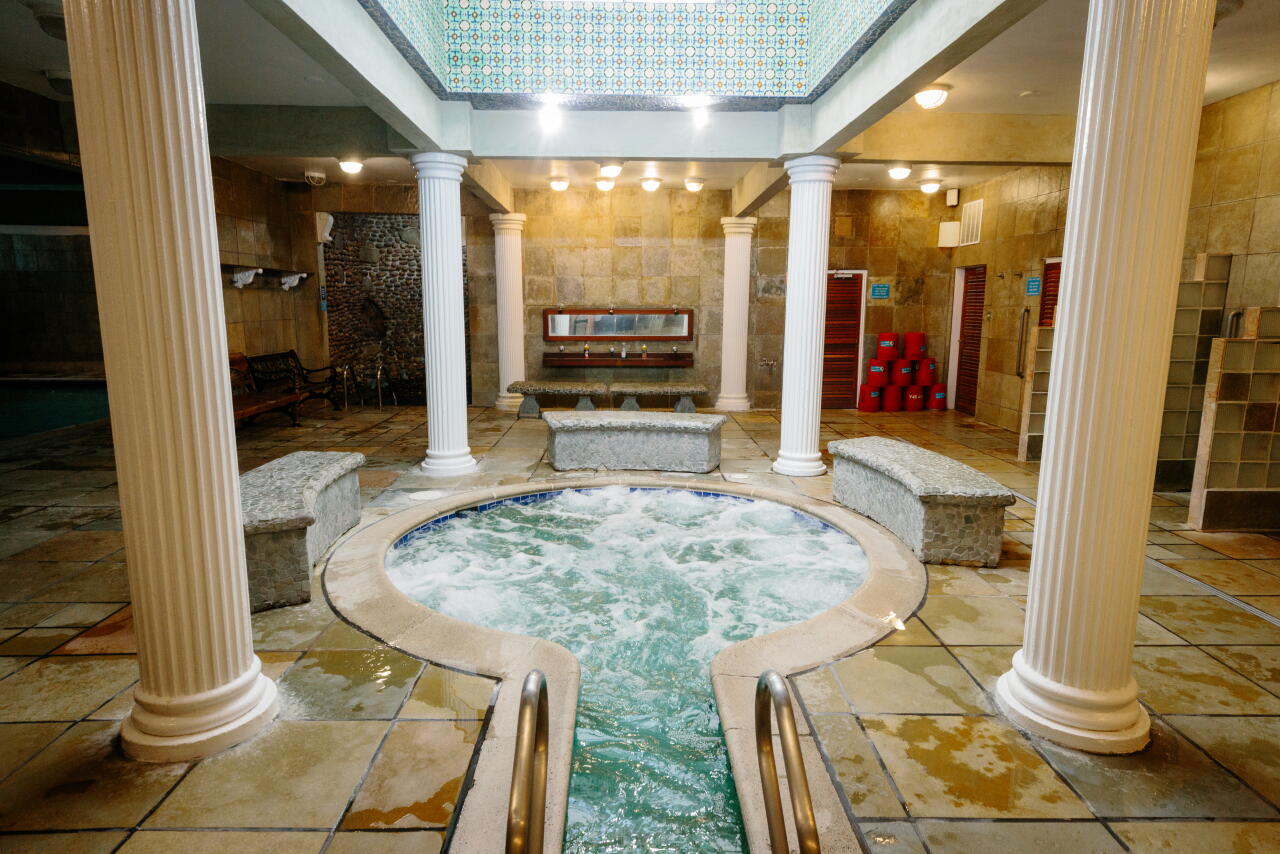 |
The jacuzzi at City Spa in Los Angeles. (Stella Kalinina / For The Times) |
|
|
Today’s recipe |
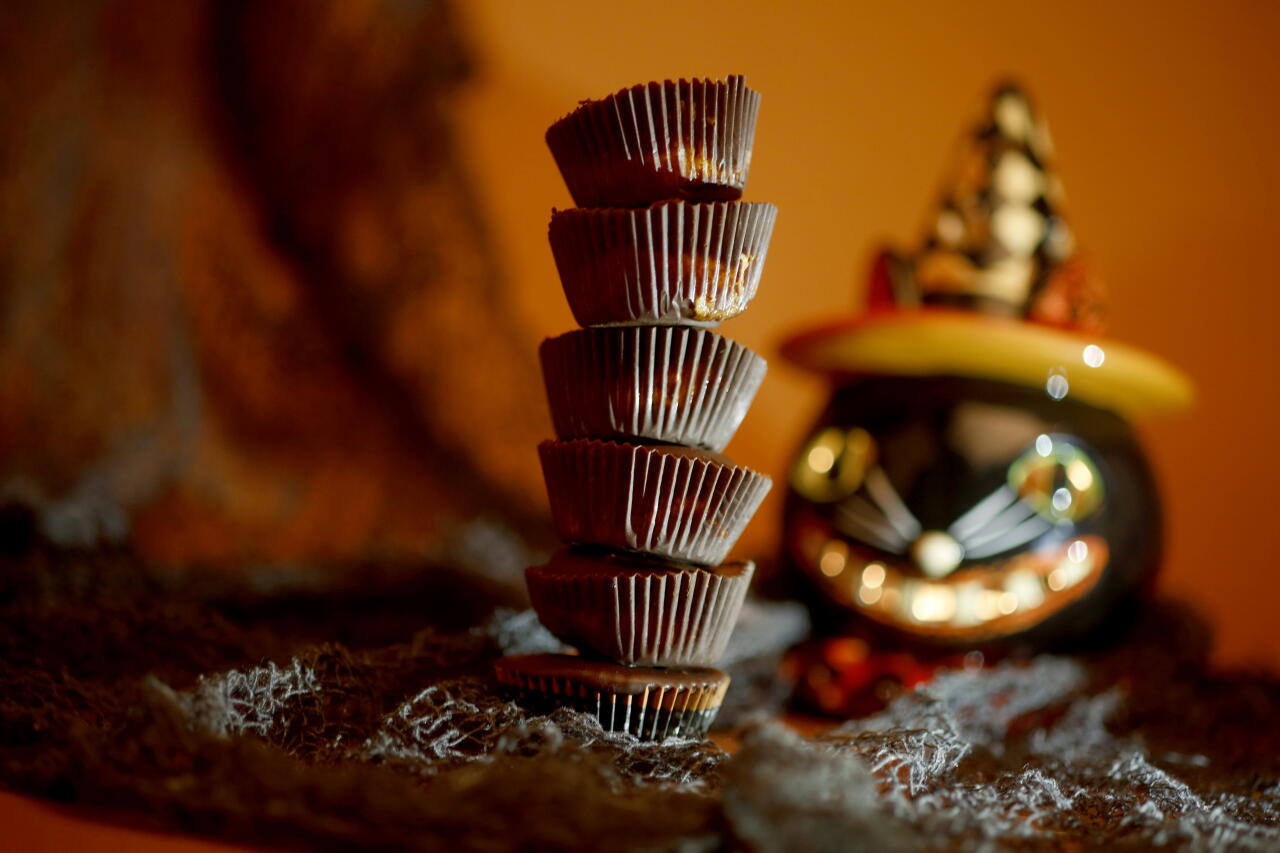 |
Homemade peanut butter cups in the Los Angeles Times studio. (Francine Orr/Los Angeles Times) |
Want to make your own Halloween candy this year? Homemade peanut butter cups are actually simple to make, nothing more than a combination of peanut butter, powdered sugar and butter, with crumbled cookies, such as vanilla wafers or graham crackers, for added texture and crunch. |
Question for you |
You’ve told us what your favorite Halloween candy is. Now we want to know: How much have you spent on Halloween candy this year? |
Email us at essentialcalifornia@latimes.com, and your response might appear in the newsletter this week. |
Photo of the day |
 |
Lyndon Laveaux stands backstage at Queen Mary’s Dark Harbor in Long Beach. He is among hundreds of seasonal actors helping turn Halloween scares into a nationwide business. (Carlin Stiehl/For The Times) |
Games |
 |
Here’s today’s mini crossword, plus our other free, daily crossword puzzle, sudoku, word search and jigsaw games. |
Have a great day, from the Essential California team |
Jack Dolan, investigative reporter
Hugo Martín, assistant editor, fast break desk
Kevinisha Walker, multiplatform editor
Andrew Campa, weekend writer
Karim Doumar, head of newsletters |
How can we make this newsletter more useful? Send comments to essentialcalifornia@latimes.com. Check our top stories, topics and the latest articles on latimes.com. |





No comments:
Post a Comment