When my colleague Doug Smith got a tip that the U.S. Forest Service was selling dead trees from the Sierra Nevada to be used as fuel for electricity — a process even dirtier than burning coal — he knew he had to investigate. |
After all, if a federal agency entrusted with protecting the environment was doing the exact opposite — for profit — it would be a blockbuster story. |
And Smith had spent his teenage summers working in the Sierra as a mule hand, so reporting on the fate of the trees would be a chance to reconnect with a majestic landscape that left an enduring mark on his soul. |
“It would also be a wild goose chase,” he told me this week, laughing into the phone. “I spent every minute wondering, is this really a story?” |
Investing in a story that might not pan out |
Every good journalist asks themselves that question sometimes, because it’s impossible to do meaningful public-service reporting without investing time and money in ideas that might not pan out. But in an age when even established outlets are chasing clicks and trying to match the frantic pace of social media, fewer and fewer reporters can afford to take the risk. |
At 79, Smith has worked at the Los Angeles Times for 56 years. He led the coverage of the infamous North Hollywood shootout in 1997 that won a Pulitzer and is a mentor for other reporters. He’s not afraid to roll the dice because he’s long past worrying how they land. |
His wild goose chase didn’t produce the story he envisioned, but it did lead to this delightfully honest tale of romping through the hills, playing cat and mouse with truckers, and discovering some surprisingly eco-friendly uses for dead trees — including as a habitat for poop-eating worms. |
 |
Pixley Biogas built an aerobic digester facility to process dairy manure and food waste in Pixley, Calif. (Tomas Ovalle/For The Times) |
Smith spent days riding shotgun with Maya Kholsa, a wildlife biologist, poet and filmmaker who secretly trailed trucks hauling trees that had been killed by wildfires. She assumed the chase would lead to electric plants and she hoped to make a documentary following the logs from “the high country to factory smokestack,” as Smith put it. |
What they got instead was a comedy of errors. |
Strike one, strike two |
They trailed one truck for miles, staying just far enough back to avoid being discovered until it pulled behind a row of industrial buildings in the tiny Central Valley town of Wasco and they lost it. |
“That was strike one,” Smith joked. |
The next truck headed north, through the even tinier Central Valley town of Pixley, and then turned west. They trailed it across “all sorts of fields and into dairy country,” Smith said. |
It was hauling wood chips made from the dead trees, and when it finally stopped, Smith and the filmmaker watched as workers using heavy machinery spread the chips across long beds on the ground. |
Turns out, the site was an environmentally friendly wastewater treatment plant. Worms known as “red wigglers” are added to the chips and then dirty water used to clean animal stalls at dairy farms is sprayed over the beds, which act like filters so the water can be reused. |
Strike two. |
Trying a more direct tactic |
The next truck stopped on the side of the highway and the driver pulled a cover over the cargo in back, as if he might be preparing for a long trip. Instead of following, Kholsa hopped out and tried a new tactic: simply asking the driver where he was going. |
“Nevada,” he said. |
That’s when Smith gave up the cat-and-mouse game and called the manager of the chipping yard, who said they used to sell wood for electricity, but the biomass industry had been dying for years. Instead, the wood chips were on their way to become planks for outdoor decks. |
“I have to say, every minute of this was fun,” Smith told me, “but we really didn’t learn too much.” |
Maybe so, but he still got a great story. |
Top stories |
 |
New home construction in Orange County. (Allen J. Schaben/Los Angeles Times) |
Why L.A. homes still cost far more than those in the suburbs |
|
|
What the rain means for Southern California’s fire season |
- The string of El Niño-fueled storms that have closed roads, crumbled boardwalks and eroded beaches may have also brought a silver lining: a potential end in sight to the region’s fire season, experts say.
- Some areas have received enough rain to quell the risk for the rest of the season, while others probably need another soaking.
|
Unprecedented voter fraud probes lead to a lawsuit |
- Top Democrats in Congress have joined a California immigrant and the Nevada State Democratic Party in suing the Trump administration over its unprecedented voter fraud probes in both states and broader efforts to meddle in state-run elections nationwide.
- Democrats and leading elections experts say that isolated voter fraud does occur and should be taken seriously, but that there is no evidence of widespread fraud.
|
|
|
More news |
|
|
Commentary and opinion |
|
|
|
|
Editor’s pick |
|
California continues to see companies large and small move to Texas and other states, citing taxes, high costs and regulations. Is the business environment really as bad as it seems? |
|
 |
|
More picks |
|
|
Keep up with California |
Your support helps us deliver the news that matters most. Subscribe to the Los Angeles Times.
|
|
|
|
|
|
Things to do |
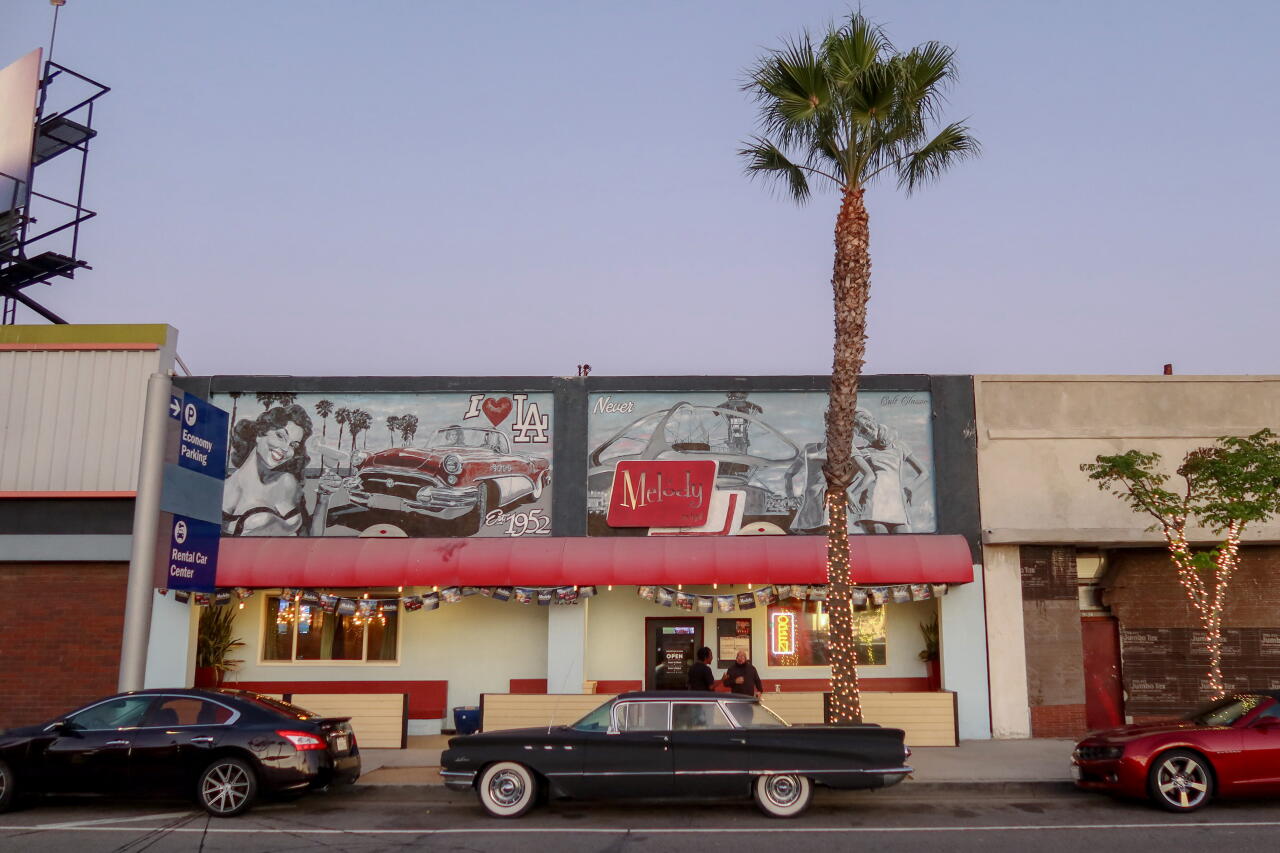 |
Melody Bar & Grill in Westchester (Calvin B. Alagot/Los Angeles Times) |
|
|
Today’s recipe |
 |
(Stephanie Breijo / Los Angeles Times) |
Few things scream comfort more than grilled cheese and tomato soup. This recipe, slightly adapted for thickness, provides a just-charred, roasted edge to the classic tomato soup due to broiling a heaping pile of vegetables together. |
Question for you |
You’ve told us your favorite Halloween candy. Now we want to know: How much have you spent on Halloween candy this year? |
Michael L. says, “It’s no surprise given the current economy and the price of nearly everything on the retail shelves that Halloween is also incredibly expensive. October decorations and costumes that once cost only a minimal investment have skyrocketed in-season. Perhaps the most shocking of all of the expenditures when you begrudgingly open your wallet at checkout is the staple of Halloween itself. I just spent nearly $50 on Halloween candy!” |
Email us at essentialcalifornia@latimes.com, and your response might appear in the newsletter this week. |
Photo of the day |
 |
Oliver Blum, 4, of Los Angeles gets his face painted like a Jack-O-Lantern at Mr. Bones Pumpkin Patch in Culver City. (Gina Ferazzi/Los Angeles Times) |
Games |
 |
Here’s today’s mini crossword, plus our other free, daily crossword puzzle, sudoku, word search and jigsaw games. |
Have a great day, from the Essential California team |
Jack Dolan, investigative reporter
Hugo Martín, assistant editor, fast break desk
Kevinisha Walker, multiplatform editor
Andrew Campa, weekend writer
Karim Doumar, head of newsletters |
How can we make this newsletter more useful? Send comments to essentialcalifornia@latimes.com. Check our top stories, topics and the latest articles on latimes.com. |





No comments:
Post a Comment