|
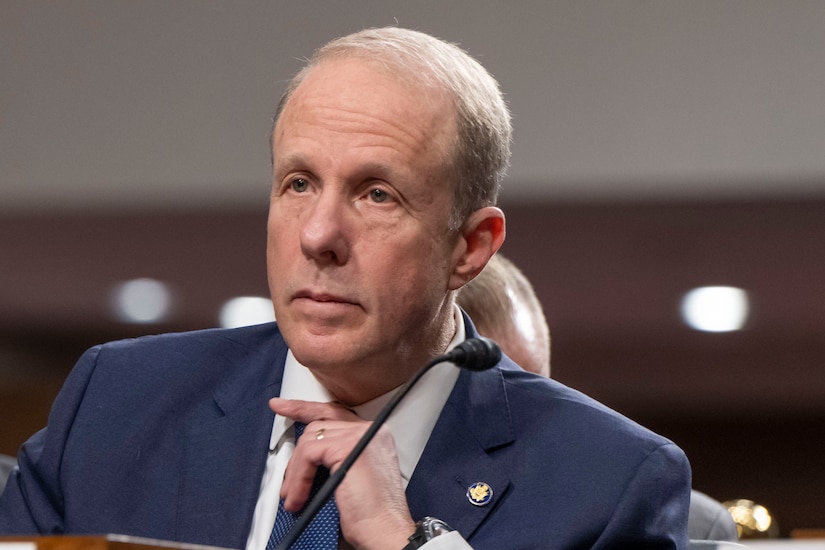
When Jeremy Latcham takes over DC Studios next week, he’ll have some decisions to make.
|
|
The Marvel veteran was named president and chief creative officer of DC Studios this month, replacing James Gunn and Peter Safran, who helmed the venerable comic book film and TV label for four years.
|
|
The move was unexpected, with Gunn and Safran initially listed among the executives tapped to lead the newly combined Skydance after the merger of Paramount Skydance and Warner Bros. Discovery. The pair are returning “full time to their creative work” but will still be involved in DC projects, including “Man of Tomorrow,” the upcoming sequel to 2025’s “Superman,” according to a Skydance statement about the leadership change.
|
|
Gunn gave slightly more detail about his thinking in a subsequent Instagram post, saying his time at DC Studios “has been trying, to say the least.”
|
|
“I dislike the at-times corporate nature of the job (thanks to Peter for taking the brunt of that),” he wrote on Nov. 9, the day his exit was announced. “I will miss the people around me, and I will miss being the co-caretaker of these great characters, but I’m also incredibly relieved and excited to get back to pure filmmaking.”
|
|
Gunn and Safran arrived at DC Studios in 2022 with great fanfare and high expectations for mapping out a cohesive vision for the comic book franchise, which has some of the best-known superheroes in Batman and Superman but had been an underdog to Disney’s Marvel Studios for a decade.
|
|
Their track record at the label was mixed.
|
|
2025’s “Superman” was well-received and hauled in more than $618 million worldwide on a $225-million production budget. But this summer’s “Supergirl” flopped, earning just over $126 million at the global box office on a reported budget of $170 million. Meanwhile, October’s “Clayface” also grossed $126 million worldwide, but on a budget of about $40 million.
|
|
The performance of these three movies alone shows one topic Latcham will have to tackle — developing a successful strategy for DC sequels.
|
|
Building franchises beyond big names such as Superman and Batman that date to the late 1930s will be key for DC, said Isabella Bond, business report editor at movie business site the Numbers.
|
|
Since 2020, seven different Marvel characters or franchises have headlined films making $500 million or more at the box office, including “Thor,” “Black Panther,” Doctor Strange” and “Guardians of the Galaxy.” By contrast, DC Studios has had two in that category, Bond said.
|
|
The difference is that Marvel has been able to turn some of its lesser-known comic book characters into household names. That’s where Latcham’s previous experience could come into play. Over his 13 years at Marvel, he worked on such films as 2008’s “Iron Man,” 2010’s “Iron Man 2,” and 2012’s “The Avengers.”
|
|
“If DC can find those characters and get the audience behind them with a strong story, that’s where they can do well,” Bond told me in an interview.
|
|
DC could also benefit from broadening its appeal globally, as its recent films have seen more domestic strength at the box office. That’s not unusual, Bond said, as the international market for U.S. films have changed over the years, but getting a boost from abroad would help, as would reining in larger production budgets.
|
|
But perhaps one of Latcham’s most important responsibilities is providing continuity and stability to a studio that has had four leaders in the last 10 years. Marvel, on the other hand, has had Kevin Feige consistently at the helm for years.
|
|
“Marvel has had so many ups and down ... but just having the ongoing oversight of Kevin Feige and the sustained leadership and vision has helped smooth out some of the rockiness and allowed them to respond to the changing box office,” said Alisa Perren, professor in the University of Texas at Austin’s department of radio, television and film and co-author of “The American Comic Book Industry and Hollywood.”
|
|
Safran and Gunn had planned out a multiyear strategy around the creative direction of DC’s universe of films and TV shows. Once Latcham officially takes the reins on Dec. 1, he’ll have to decide how much to keep, and how much he wants to shake things up.
|
|
“The speculation or hope is that [Latcham] will have learned best creative and business practices that can be emulated successfully with DC,” Perren said.
|
|
Although Latcham has not said much about his plans, Skydance’s statement about his appointment gives some insight. Both Skydance Motion Picture Group co-Chairs Dana Goldberg and Josh Greenstein, as well as Latcham himself, noted the importance of fan engagement to the franchise.
|
|
“Under his leadership, every film and television show will be ushered from start to finish through the prism of the legions of fans who love and champion it,” Goldberg and Greenstein said in the statement.
|
|
And for Latcham’s part, he noted that bringing DC characters to the screen “in a way that excites lifelong fans while introducing their timeless stories to the next generation is a massive responsibility that I do not take lightly.”
|
Stuff We Wrote
|
|
|
|
|
|
|
|
|
|
|
|
|
|
|
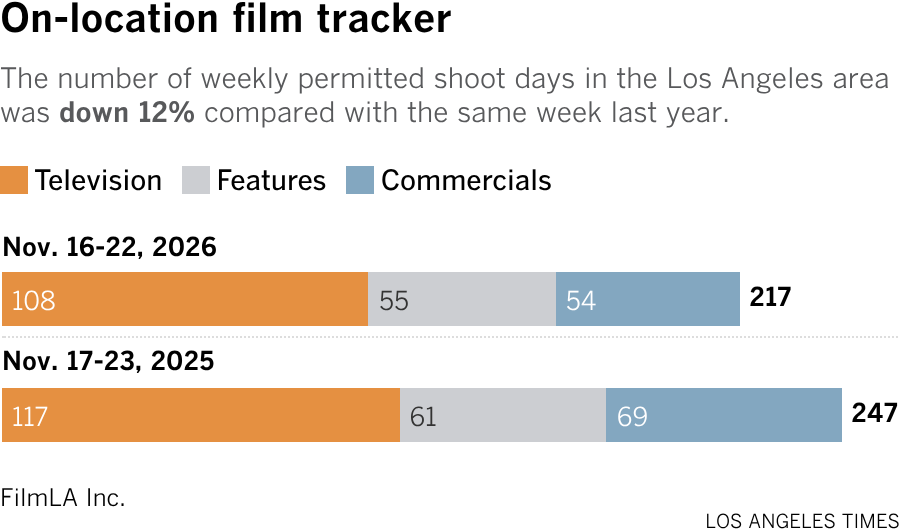
Film shoots
|
 |
|
|
Number of the week
|
 |
|
The odds were in Lionsgate’s favor last weekend as “The Hunger Games: Sunrise on the Reaping” pulled in $120 million in its domestic debut, according to studio estimates. Worldwide, the movie made a total of $225 million.
|
|
The sixth installment of the young adult dystopian franchise charts the origin story of mentor Haymitch Abernathy, played by Woody Harrelson in the original quartet of films.
|
|
The movie’s reception indicates there’s still demand for the franchise, which first came to the screen in 2012. It also bolsters a strong 2026 for Lionsgate, which had success with the carryover performance of December’s “The Housemaid” and the billion-dollar-grossing musical biopic, “Michael.”
|
|
Keep up with California
|
Your support helps us deliver the news that matters most. Subscribe to the Los Angeles Times.
|
|
|
|
|
|
What I’m watching
|
|
After the disaster that was the UCLA-Michigan game last weekend, I needed a steady and predictable watch. I’ve followed CBS’ “Tracker” for several seasons now, and that procedural has kept me engaged with its routine case-of-the-week, the larger family mystery at its core and — now that it’s filming in California — trying to figure out the shoot locations.
|