Dozens drown off Morocco’s coast

The Refugee Brief, 3 October
 
By Kristy Siegfried @klsiegfried   | 3 October, 2018
WHAT YOU NEED TO KNOW
Dozens drown off Morocco’s coast. At least 30 people died in a shipwreck in the Western Mediterranean on Monday afternoon, according to the Moroccan navy and a Spanish aid organization. The International Organization for Migration told Reuters that the boat had been adrift since Sunday with 60 people on board. Helena Maleno, a Morocco-based activist with Spanish NGO Caminando Fronteras, said the boat’s passengers first contacted her early Sunday and that she had alerted Spanish authorities with their approximate location. Spain’s Maritime Safety and Rescue Agency said the information was conveyed to Moroccan authorities as the location Maleno provided was within that country's jurisdiction. News of these latest deaths at sea emerged on the five-year anniversary of a shipwreck off the coast of the Italian island of Lampedusa that claimed the lives some 368 refugees and migrants.
An epidemic of misery at Moria. This long read by Patrick Kingsley for the New York Times takes a deeper look at the many recent reports of a mental health crisis at the severely overcrowded Moria reception centre on the Greek island of Lesvos. NGO workers have described conditions in the centre as worse than in many refugee camps in crisis zones. The overcrowding is so severe that asylum-seekers reportedly spend up to 12 hours a day queuing for meals. This Guardian report focuses on the high levels of depression, self-harming and even suicide attempts among the 3,000 minors living at Moria, many of them from war-torn countries such as Syria and Afghanistan where they had already experienced trauma.
WHAT’S ON OUR RADAR
The long road to citizenship for Thailand’s stateless people. In recent years, Thailand has been making in-roads towards its goal of zero statelessness by 2024. Stateless persons can now access basic education and health care and state hospitals issue birth certificates to all children born in Thailand, but in this Reuters report activists claim that applying for citizenship remains a “challenging and complex ” process that depends on applicants having the right documents. Among the 487,000 stateless persons registered with the Thai government are indigenous hill dwellers and children of refugees from Myanmar who were born in Thailand but lack birth certificates.
Fate of Syria’s Idlib hangs in the balance. IRIN takes a closer look at the deal brokered by Turkey and Russia last month to establish a de-militarized zone in Syria’s rebel-controlled Idlib province. The agreement has so far staved off a government offensive and averted a humanitarian crisis, but details of the agreement have yet to be fleshed out or made public and it’s still unclear whether rebel groups will comply with the 15 October deadline to withdraw their fighters from the buffer zone. Aid groups point out that, even with a deal in place, the humanitarian situation in Idlib and the surrounding areas – home to as many as 2.5 million people – remains grim.
Refugee-led football teams in Italy provide rare space for integration. According to this report by Al Jazeera, there are at least 250 refugee-led football teams across Italy. Some are refugees-only, but others are mixed, such as St Ambroeus FC in Milan. Many of the mainly young West African players on the team have humanitarian protection, an alternative protection status that they risk losing as Italy plans to restrict its use under a new security decree. At a time when hostility towards refugees and migrants has increased in Italy, Al Jazeera describes football clubs like St Ambroeus as “a precious space for integration”.
Refugees and migrants tell their own stories through photographs. The 25th annual exhibition by the Open Society Documentary Photography Project, “Another Way Home ”, brings together eight projects led by 13 photographers and artists who are exploring the topic of migration. Rather than featuring the images of suffering often associated with the refugee experience, the projects focus on themes of identity, community and resilience. Several of the participants are refugees or migrants themselves, while others have collaborated with immigrant communities to create and share their stories. The New York Times features some of the images from the exhibition.
GET INSPIRED
Syrian refugee and violinist Mariela Shaker talks to the Chronicle of Higher Education about how a scholarship at Monmouth College in Illinois gave her a way out of Aleppo – an opportunity she wishes were available to more Syrians still trapped in the country and unable to continue their education. Having graduated from Monmouth, Shaker now performs all over the world. “Music can be much more powerful than words,” she says. “When you lose your home, music is all that’s left to tell the story.”
DID YOU KNOW?
From 3 October 2013 until today, 17,900 migrants and refugees have died or gone missing in the Mediterranean Sea – an average of 10 people per day over a five-year period.
 
Follow UNHCR
Facebook
Twitter
YouTube
Instagram
UNHCR
Produced by the Communications and Public Information Service. 
Managing Editors: Melissa Fleming, Christopher Reardon and Sybella Wilkes
Contributing Editor: Kate Bond
Subscribe to The Refugee Brief or view recent issues


HQP100 P.O. Box 2500 CH-1211 Geneva 2
Tel +41 22 739 85 02   |   Fax: +41 22 739 73 14


Views expressed in reports highlighted in this newsletter
do not necessarily reflect those of UNHCR.

Unsubscribe   |   Update Profile   |   Privacy Policy   |   View this email in your browser

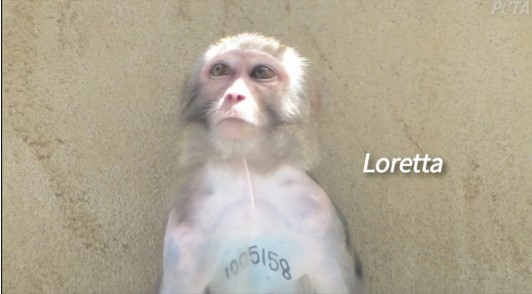
#WhereIsLoretta?

Action Alert

Dear Aaaaaaa,

Tattooed in black ink across her chest, the numbers 1005158 only became more visible as her hair fell out in patches, likely as a result of the stress that she endured at Primate Products, Inc. (PPI), a notorious facility that imports and warehouses primates before selling them to laboratories. A PETA eyewitness gave Loretta a name, likely the first act of compassion she'd ever been shown.


A team of U.S. Department of Agriculture inspectors confirmed PETA's findings, citing PPI for at least 25 violations of nine animal-welfare regulations and opening an investigation of the facility. Three years later, that investigation is still ongoing.

So where is Loretta today? It's time that PPI released information about her whereabouts. Please join our efforts to find her.

 
#WhereIsLoretta?
 

Thank you for your compassion for animals.

Sincerely,


Nearly 2 million Venezuelans have fled country since 2015

The Refugee Brief, 2 October
 
By Kristy Siegfried @klsiegfried   | 2 October, 2018
WHAT YOU NEED TO KNOW
Nearly 2 million Venezuelans have fled country since 2015. “Some 5,000 people are now leaving Venezuela daily – the largest population movement in Latin America’s recent history,” UN refugee chief Filippo Grandi told the organization’s executive committee on Monday. “A non-political and humanitarian approach is essential to help states receiving them in growing numbers,” he added. UNHCR spokesperson William Spindler told AFP that 1.9 million people had left Venezuela since 2015, an increase on a previous count of 1.6 million. Colombia’s president, Ivan Duque, said on Friday that the influx of more than a million Venezuelans into his country was costing about 0.5 per cent of GDP. Duque said Colombia would continue its "open arms" policy but added that the economic and social costs on his country had to be evaluated.
Bangladesh delays plan to move Rohingya to remote island. AFP reports that the Bangladeshi government has postponed its plans to begin relocating Rohingya refugees to the island of Bhashan Char, amid staunch opposition to the idea among refugees living in settlements near the Myanmar border. Prime Minister Sheikh Hasina was due to open the new settlement built to house 100,000 refugees on Bhashan Char on 3 October, but a spokesperson for Bangladesh’s armed forces, which has overseen construction work on the island, said the opening ceremony had been delayed. The UN has said that more thorough technical and protection assessments are needed to assess the suitability of the site for the relocation of refugees and that refugees need to be consulted about the plans.
WHAT’S ON OUR RADAR
Surge in suspected cholera cases in Yemen’s Al Hudaydah. Suspected cholera cases have almost tripled in Yemen’s coastal Al Hudaydah region since fighting there escalated in June, according to Save the Children. Health facilities supported by the charity recorded a 170 per cent increase in suspected cases between June and August. Air strikes in July damaged a sanitation facility and water station that supplies Al Hudaydah with most of its water. In addition, over half a million people have been displaced from their homes since June and are now living in host communities with little access to clean water and sanitation.
German government reaches compromise on immigration reform. Germany’s coalition government agreed on a new immigration law on Tuesday, which Berlin hopes will attract more skilled workers from outside the European Union. The proposed law reportedly “adheres to the principle of separating asylum and labour migration”. Not included in the law is a special dispensation sought by the Social Democratic Party (SPD), which would have allowed rejected asylum-seekers to remain in the country if they had found a job and learned German. The parties said they would define a residence status for well-integrated asylum-seekers who could not be returned home.
Telecoms giants dial in to refugee markets. This article, published last week as part of a Financial Times special report called Investing in Refugees, looks at how high population density in refugee settlements combined with refugees’ high demand for connectivity is pushing more telecoms companies to view refugees as potential customers. At Nyarugusu refugee camp, near Tanzania’s border with Burundi, a cell tower installed by Vodacom in 2016 is running at full capacity and the average revenue per refugee user is higher than for the rest of Tanzania, proving the business case. Improved connectivity creates the foundation for other services such as online education and mobile payment systems.
GET INSPIRED
The fourth episode in UNHCR’s podcast series, “Awake at Night”, features an interview with documentary photographer Giles Duley. He talks about how his disillusionment with fashion photography drove him to become a care worker before he realized that he could combine his passion for helping others with his love of photography. Duley lost three limbs when he stepped on a landmine in Afghanistan, but he continues to travel to the world’s war zones to document the lives of those caught up in conflict.
DID YOU KNOW?
Just 884 refugees and migrants disembarked on Italian shores during the month of September this year, compared to 6,291 during September last year.
 
Follow UNHCR
Facebook
Twitter
YouTube
Instagram
UNHCR
Produced by the Communications and Public Information Service. 
Managing Editors: Melissa Fleming, Christopher Reardon and Sybella Wilkes
Contributing Editor: Kate Bond
Subscribe to The Refugee Brief or view recent issues


HQP100 P.O. Box 2500 CH-1211 Geneva 2
Tel +41 22 739 85 02   |   Fax: +41 22 739 73 14


Views expressed in reports highlighted in this newsletter
do not necessarily reflect those of UNHCR.

Unsubscribe   |   Update Profile   |   Privacy Policy   |   View this email in your browser

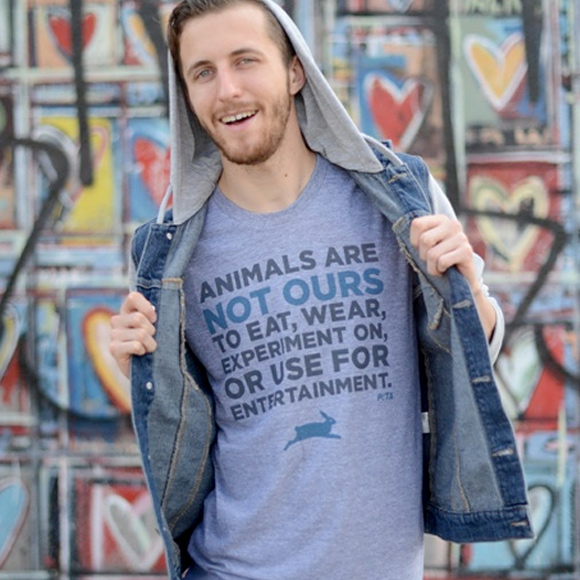
Take Down Speciesism and Show That We Are ALL Animals