Debt initiative could save countries $12 billion

Having trouble seeing this email?
 
A man delivers household gas on a bicycle on an empty street in Kathmandu, Nepal, in March 2020. Photo: © Denis Dymov/Shutterstock
 

Since the COVID-19 outbreak, developing economies have suffered unprecedented capital outflows. The World Bank Group has created a virtual one-stop for the latest information about Debt Service Suspension Initiative (DSSI). It highlights the potential savings for each eligible country—both in dollar terms and as a percentage of GDP. Explore the data!

Saving lives: The World Bank Group is assisting 100 countries, home to 70% of the world's population, with their COVID-19 responses. 2/3 of these projects are health operations including emergency needs. Here are some of these projects.

Forced displacement: The economic and social impacts of coronavirus are likely to deeply affect both refugees and host communities in developing countries, exacerbating their pre-existing vulnerability and dependence on overstretched humanitarian assistance.

Education: School closures due to COVID-19 have left over a billion students out of school. A new World Bank report finds that the pandemic could lead to permanent loss in learning and trillions of dollars in lost earnings over time for this generation of students.

Building a balanced future: In cities, it's not all about density. Cities must think in terms of economic geography to help contain the spread of COVID-19. This crisis is exposing inequalities that urgently need to be addressed. Read how the World Bank is deploying AI in 15 cities across the globe to support the most vulnerable.

Geospatial innovation: While investments in healthcare are obvious, geospatial investments — such as those planned in Kosovo — are also critical, as they can support different sectors of the economy, including healthcare.

New normal: We will be living with COVID-19 and its consequences for a long time to come. What will be the new normal for health systems and universal health coverage?

South Asia: As COVID-19 ravages lives and economies across South Asia, millions of women and men in the region are engaged in a relentless fight to curb the spread of the coronavirus and support their communities.

It takes a village: Acute food insecurity is projected to double in 2020, exacerbated by COVID-19. Members of the World Bank-supported S4YE Youth Advisory Group (YAG) have stepped up to help manage the food crisis in their respective local communities. Here are their stories.

Interview: Meet Mari Pangestu, the World Bank's Managing Director for Development Policy and Partnerships.

Go deeper: Learn how the World Bank Group is responding to the COVID-19 (coronavirus) pandemic. Explore our multilingual portal. Click, bookmark and come back for updates.

Facebook
 
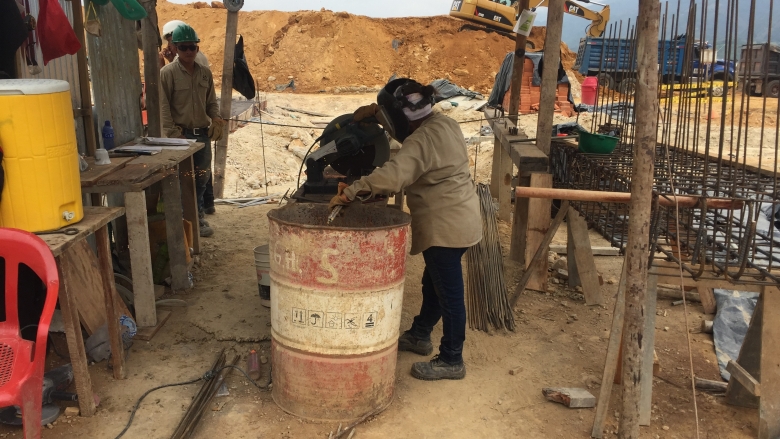
Clara Beltrán working at a construction site in Colombia. © Metrolínea
 

With the aim of improving the gender balance in construction, the World Bank is implementing gender strategies in urban transport projects in Colombia. These have led to the increased participation of women in infrastructure projects.

Facebook Twitter
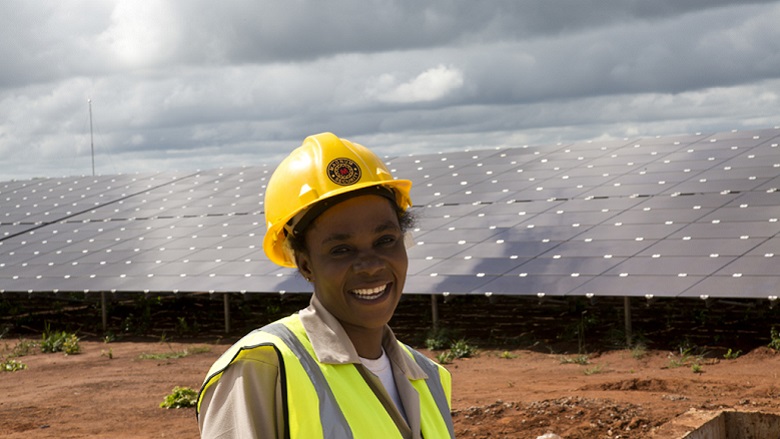
In Zambia, >27,000 homes are supplied with electricity thanks to the Bangweulu Scaling Solar Plant, based on average power consumption per capita in Zambia. © Photo: Scaling Solar
 

Climate finance, along with falling renewable energy prices, is enabling developing countries to expand and diversify their energy supply. A new report identifies eight ways policymakers can drive clean, resilient growth, including through innovation and climate intelligence products.

Facebook Twitter
© Simone D. McCourtie/World Bank

"Gender-based violence is a global crisis: one out of three women experience physical or sexual violence in their lifetime. The rate of intimate partner violence is 34 percent higher in conflict-affected economies than in economies not afflicted by conflict. Violent conflicts have reached their highest levels in the past three decades, and women and children have experienced lasting impacts."

—Denis Mukwege, Louise Cord, and Jean-Christophe Carret, June 18

Facebook Twitter
© World Bank

New homes are providing informal sector workers with better living conditions than the crowded shanties they lived in before. Watch how this is #ChangingLives in #India.

Read more #ChangingLives stories.

Facebook Twitter
© Dominic Chavez/International Finance Corporation

Call it the "great lockdown", the "coronavirus recession" or another moniker – whatever your label, the facts are clear: this unprecedented pandemic is having an unprecedented impact on the private sector.

Facebook Twitter
 
© Jutta Benzenberg/World Bank

Monumental efforts are underway to help governments respond to the crisis triggered by COVID-19. As countries look ahead on how to build back better, carbon pricing policies are in the spotlight. Catch a replay of our event, with introductory remarks from World Bank Managing Director Mari Pangestu.

Facebook Twitter

#COVID19 & #DesertLocusts are disrupting food production in the world. @JosefaSacko, @unicefchief & @DavidMalpassWBG discuss what can be done to strengthen the food system against multiple challenges in the first of our #ResilientRecovery series. http://wrld.bg/1e6J50AbGun

The #COVID19 pandemic shock is expected to cause the global economy to contract 5.2% this year—the deepest recession since WWII. The speed of forecast downgrades suggests a further downward revision is possible. http://wrld.bg/sqWp50AeJNH #WBGEP2020

Chart: Share of global GDP represented by countries with mandatory closures and cancellations.By early April, nearly 150 countries had closed all schools and mandated cancellation of events, and more than 80 had closed all workplaces in order to control the spread of the virus. Travel restrictions were widespread. The mandatory lockdowns, together with spontaneous social distancing by consumers and producers, have wreaked havoc on global activity and trade, and have been accompanied by gyrations in financial markets and sharp declines in oil and industrial metals prices. Read More>>

facebook twitter instagram instagram instagram

Accredited journalists may obtain advance access to reports and information by registering with the Bank's Online Media Briefing Center, a password-protected site for working journalists.

Material in this newsletter is copyrighted. Requests to reproduce it, in whole or in part, should be addressed to pubrights@worldbank.org

For more information visit our website: worldbank.org.

Access to Information | Other Bank Newsletters | Privacy Policy


Unsubscribe from this list | Update subscription preferences

No comments:

Post a Comment