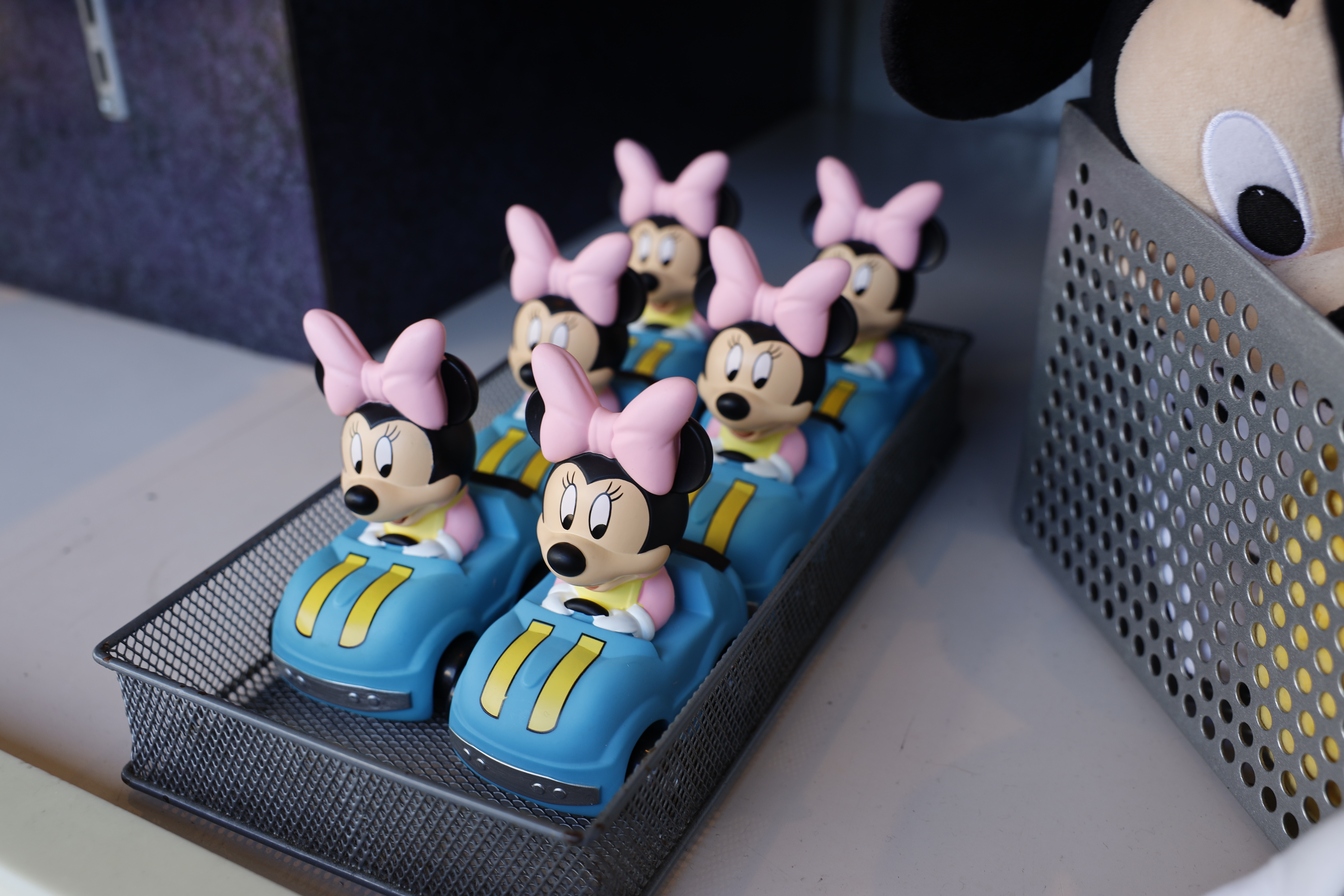
When I broke the news last week that Disneyland is planning to ditch gas engines and make a long-overdue switch to electric or hybrid cars at its nearly 70-year-old Autopia attraction in Anaheim, I got two main questions from readers.
The first, typically from fellow Disney fans, was this: What about Autopia's counterparts in Florida and Paris?
Alas, I don't have anything to tell you on that front. When I asked Walt Disney Co. spokesperson Melissa Britt if electric vehicles are coming to Tomorrowland Speedway at Walt Disney World or Autopia at Disneyland Paris, she didn't offer much.
"While we don't have anything to share specifically about plans for [those attractions], we are always looking at ways for us to achieve our sustainability goals and do have other future projects in the works," Britt said in an email.
She added that the company "has operated under a long-term vision to reach net zero greenhouse gas emissions" since 2009.
The second question I've been getting: If Autopia is part of Disney's Tomorrowland, supposedly all about building a better future, why has it taken so long to replace oil-fueled vehicles that we've known for decades are spewing deadly greenhouse gases?
That one I can answer.
The ride's original sponsor was Richfield Oil, which later merged with another company to create ARCO. In 1998, Disney and oil giant Chevron Corp. inked a 13-year marketing deal that included Autopia sponsorship — dashing any hopes that the ride would go electric, even as scientists sounded the alarm over global warming and electric cars began to enter the public consciousness.
Then in 2016, Honda became the ride's sponsor. Good time for an electric overhaul, right?
Nope.
Honda spokesperson Marcos Frommer told me via email that the company did "replace the existing engines with cleaner, more efficient engines" as part of Autopia's 2016 overhaul. But as I noted in last week's column, the noxious fumes emitted by the gas engines still reek terribly, to the point where it can be hard to breathe just waiting in line. I feel terrible for the Disney employees who work there all day — and worried for their health. The exhaust can't be good for their lungs.
So I was especially disturbed, when I rode Autopia last month for the first time in years, to realize how eager Honda appears to be to leave riders with the impression that its involvement with the attraction somehow contributes to a greener future.
Several videos that play for guests waiting in line feature Honda's ASIMO robot character apparently getting ready for a road trip. One of the videos shows ASIMO seemingly deciding where to travel, sitting at a computer scrolling through illustrated images of landscapes including Joshua Tree National Park, Death Valley National Park and Sequoia National Forest.

A video that plays for guests in line at Autopia shows Honda's ASIMO robot character seemingly preparing for a road trip. (Allen J. Schaben / Los Angeles Times)
The terrible irony is that many of those landscapes are increasingly being torn apart by bigger, hotter wildfires and other weather disasters made worse by global warming, and overwhelmed by air pollution from gasoline vehicles on our freeways.
To me, though, Autopia's cruelest twist is the sign that all drivers pass under as they finish the attraction:
"Autopia — Powered by Honda. Powering Your Dreams Through Tomorrow."
It's a slight rephrasing of Honda's corporate slogan, "the power of dreams." Frommer, the company spokesperson, suggested it's a fitting sign-off at Anaheim's Autopia as Honda works toward a goal of making battery electric and fuel cell cars 100% of its sales by 2040, and as it collaborates with Disney "to tell inspirational stories that celebrate personal mobility and freedom."
"Honda has been a pioneer in introducing environmentally friendly technologies to reduce vehicle emissions," Frommer said.
But those are lame excuses after eight years of greenwashing at Disneyland — and who knows how many yet to come.
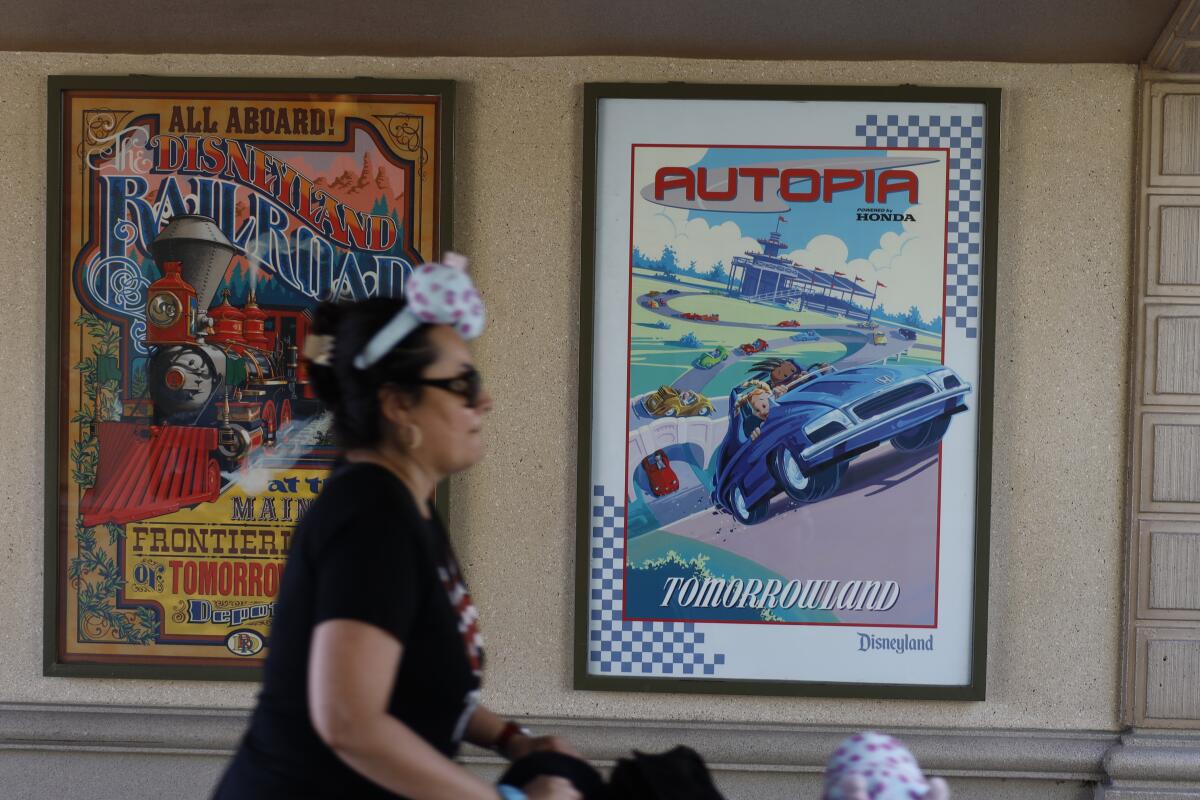
A guest walks past a poster advertising Autopia near the Disneyland entrance. (Allen J. Schaben / Los Angeles Times)
Disney would tell me only that it's planning to remove pure gasoline engines from Autopia "in the next few years" — hardly a firm timeline. The company wouldn't confirm if the new cars will be all-electric, or hybrids that still use some amount of oil.
It's possible the timeline is tied to the end of Honda's sponsorship agreement, although that's hard to know for sure. MotorTrend magazine reported in 2016 that Honda signed a 10-year deal to sponsor Autopia, which could be up for renewal in 2026.
Whatever behind-the-scenes business machinations need to be worked out, I've heard loud and clear from Disney fans and folks who care about the climate crisis — and believe me, there are many who fall into both categories — that as excited as they are to see the company embrace clean energy at Autopia, they want to see Disney tell more stories about sustainability.
And they want to see it happen faster.
Maybe that means Disney adopts my pitch to revitalize Tomorrowland as a hotbed for clean energy progress. Maybe it means the Burbank company produces more movies and TV shows that showcase climate solutions. Whatever it looks like, many Disney fans want to see the world's most influential storytellers stand as leaders in this space, not laggards.
They don't want to wait for "in the next few years." They know human civilization doesn't have that much time.
Fortunately, Disney's powerful chief executive, Bob Iger — who has a history of standing up for climate action — is looking extra-powerful right now. He won an overwhelming victory last week against a shareholder uprising led by investor Nelson Peltz, who slammed Iger as "woke" for producing Marvel superhero films led by Black and female stars. The shareholder victory should help insulate Iger from the inevitable unfair criticism if he decides to sign off on climate- or sustainability-flavored storytelling.
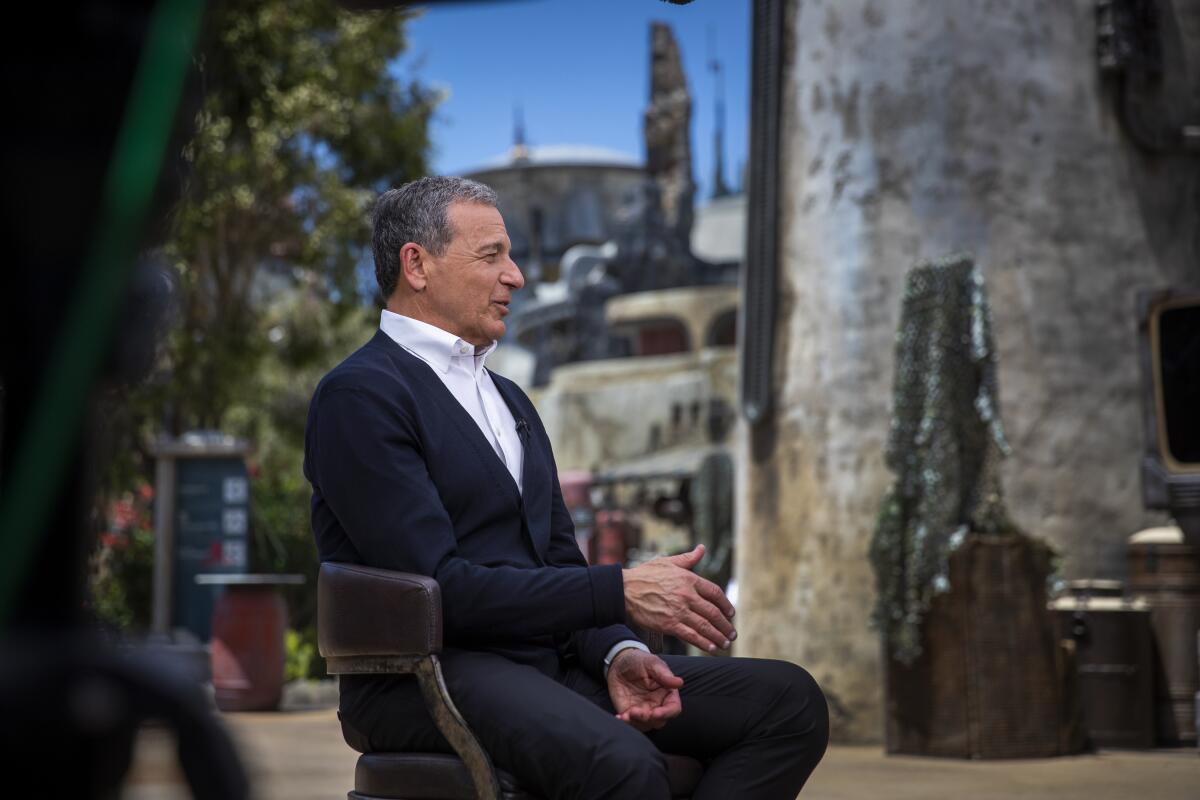
Disney Chief Executive Bob Iger is interviewed at Disneyland's Galaxy's Edge in 2019. (Allen J. Schaben / Los Angeles Times)
To be clear, Disney is already doing that kind of storytelling in its theme parks — bits and pieces of it, scattered about.
The best example I've seen is at Disney World's Epcot, in the "Awesome Planet" film narrated by "Modern Family" actor Ty Burrell. Sadly, the film doesn't explicitly mention climate change. But it does highlight the horrors of worsening heat waves and droughts, rising oceans, more extreme storms and more destructive fires. It also features a montage showing wind and solar energy.
I've found a few other small examples, mostly at Epcot and Florida's Animal Kingdom — typically informational signs, some of which do mention global warming. What's needed now is bigger, bolder and more systemic thinking, across the Walt Disney Co.
On the clean energy solutions front, Epcot's Test Track attraction is probably the strongest example. It's sponsored by Chevrolet, and when I visited last summer, the post-ride showroom featured two Chevy electric vehicles, alongside several gasoline models.
I'd love to see an all-EV showroom the next time I make it to Orlando.
Like I said last week, I agree with Iger that for Disney, entertainment must come before messaging. But I also agree with fellow L.A. Times columnist Mary McNamara, who urged Iger after last week's shareholder vote not to "hand Peltz a cultural victory by embracing his antiquated (read: racist, sexist, homo-/transphobic) notions of what future Disney products should look like."
Referring to Peltz's insistence that "people go to watch a movie or a show to be entertained," not to get a message, McNamara rightfully noted that every story sends a message: "Love conquers all, adversity can be overcome, with great power comes great responsibility, sometimes the bad guy wins, just because we can doesn't mean we should, we're all in this together."
"Without messages, storytelling cannot exist," McNamara wrote.
It's so true, and so relevant to climate. When Autopia opened in 1955, one year before President Eisenhower signed the Federal-Aid Highway Act, it sent a message that we should dream of oil. Today, and for "the next few years," it sends the same message.
We need new messages, new stories, new dreams.
Disney, you can't move fast enough.
On that note, here's what's happening around the West:
TOP STORIES
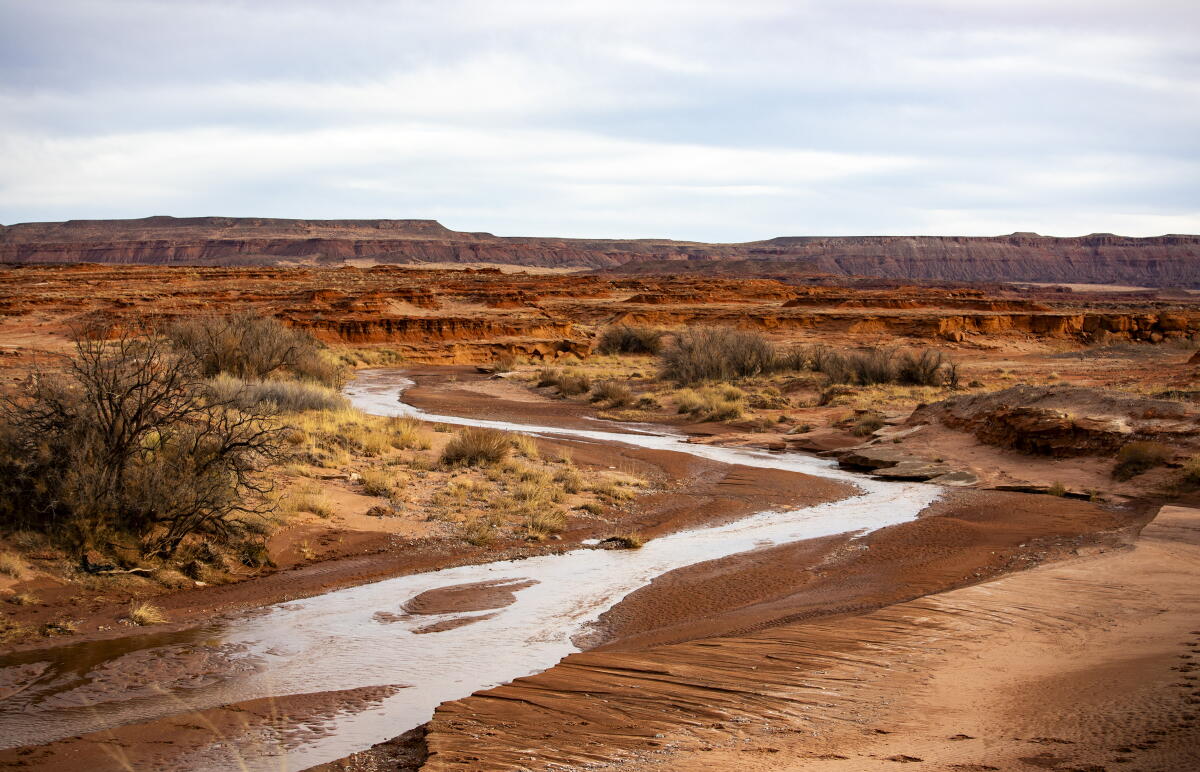
Water runs across the Navajo Reservation in Tuba City, Ariz. (Brian van der Brug / Los Angeles Times)
On the Navajo Nation, many Indigenous families lack access to clean drinking water, even as big cities and farms suck the Colorado River dry. Here's the heart-wrenching story from my L.A. Times colleagues Tyrone Beason. Who bears the most blame for drying up the Colorado? Well, it's either those of us eating beef and cheese or the farmers producing it; a recent study found that hay grown to feed cows consumed nearly half the Colorado River water diverted by humans, The Times' Ian James reported. In related news, efforts to conserve Colorado River water on Imperial Valley farms — which use more of it than anyone — have hit a roadblock, with some environmentalists raising concerns that less water flowing off fields into irrigation drains could endanger tiny fish that have taken up residence in those drains. Details here by my colleague Hayley Smith.
If you're looking for reasons to be optimistic about the energy transition, this story by Canary Media's Julian Spector is a good one. He reports that the nation's second-largest battery storage plant is nearly finished in the Southern California city of Menifee, and that it got built super fast, replacing gas-fired turbines. The batteries will help Southern California Edison and San Diego Gas & Electric keep the lights on after dark, when solar panels stop generating. In a dose of less-good news, the Arizona Republic's Joan Meiners reports that a locally owned electric co-op is pushing to build a gas plant a few hundred feet from homes in Arizona, even as residents push back and ask why solar panels and batteries can't do the job instead. Her story is a reminder that it's not just big investor-owned power companies defending fossil fuels at the expense of renewable energy.
Adapting to climate change will cost Los Angeles County $12.5 billion over the next 15 years, according to a new report — and that's a conservative estimate that doesn't include damage from increasingly extreme weather. Hayley Smith has the details, which include $4.3 billion to whisk away floodwaters during ever-more-dangerous storms and $1.4 billion to plant trees to help people stay cool as temperatures grow deadlier. Other parts of the state face similarly daunting risks — including Highway 1, particularly where it's perched along the coast near Big Sur. Ryan Fonseca discussed the iconic roadway in our Essential California newsletter last week, asking, "As climate change fuels more intense weather events — like the intense rain and sea level rise that put the state's precarious infrastructure at even greater risk — what version of Highway 1 can continue to exist?"
THE ENERGY TRANSITION

The total solar eclipse, seen on Monday in Bee Cave, Texas. (Andrew Gombert / Los Angeles Times)
California's solar-heavy power grid was just fine during Monday's solar eclipse, thank you very much. The San Diego Union-Tribune's Rob Nikolewski caught up with the state's main power grid operator ahead of the event, and explained that there would be plenty of other power sources to cover the brief loss of solar energy during the event. Longer term, officials are making plans to ensure the lights stay on even during longer periods of time when in-state sun and wind aren't enough. Just last week, the grid operator released a $6.1-billion plan to build new electric lines that would help import solar and wind power from Arizona, Idaho, Nevada, New Mexico and from offshore wind turbines that would produce more consistently than onshore wind farms.
If you don't like wind and solar farms that gobble up lots of land and wildlife habitat, you'll be thrilled to hear that the Biden administration announced millions of dollars in funding for solar panels over irrigation canals in California. Here's the story from Natalie Hanson at Courthouse News Service. And even if you're OK with big wind and solar farms, you should like this too — solar panels over canals can save water by reducing evaporation, and limit land-use battles between developers and conservationists that slow the energy transition. There's no perfect climate solution. But the less conflict, the better.
California Public Utilities Commission staffers released a plan to add monthly fixed charges to the electricity bills paid by Southern California Edison, Pacific Gas & Electric and San Diego Gas & Electric customers, while also reducing how much those homes pay for each kilowatt-hour of electricity they use. If that sounds complicated — well, it is. The Associated Press' Adam Beam explained the plan, which could have major implications for the energy transition. For more context, see my column from February. It's yet to be seen whether Gov. Gavin Newsom's appointees on the utilities commission will approve the plan. In other utility bill news, Edison and Southern California Gas customers are set to receive their largest-ever discounts under one of the state's signature climate change programs this year. The Times' Caroline Petrow-Cohen has the details.
WATER AND WILDLIFE
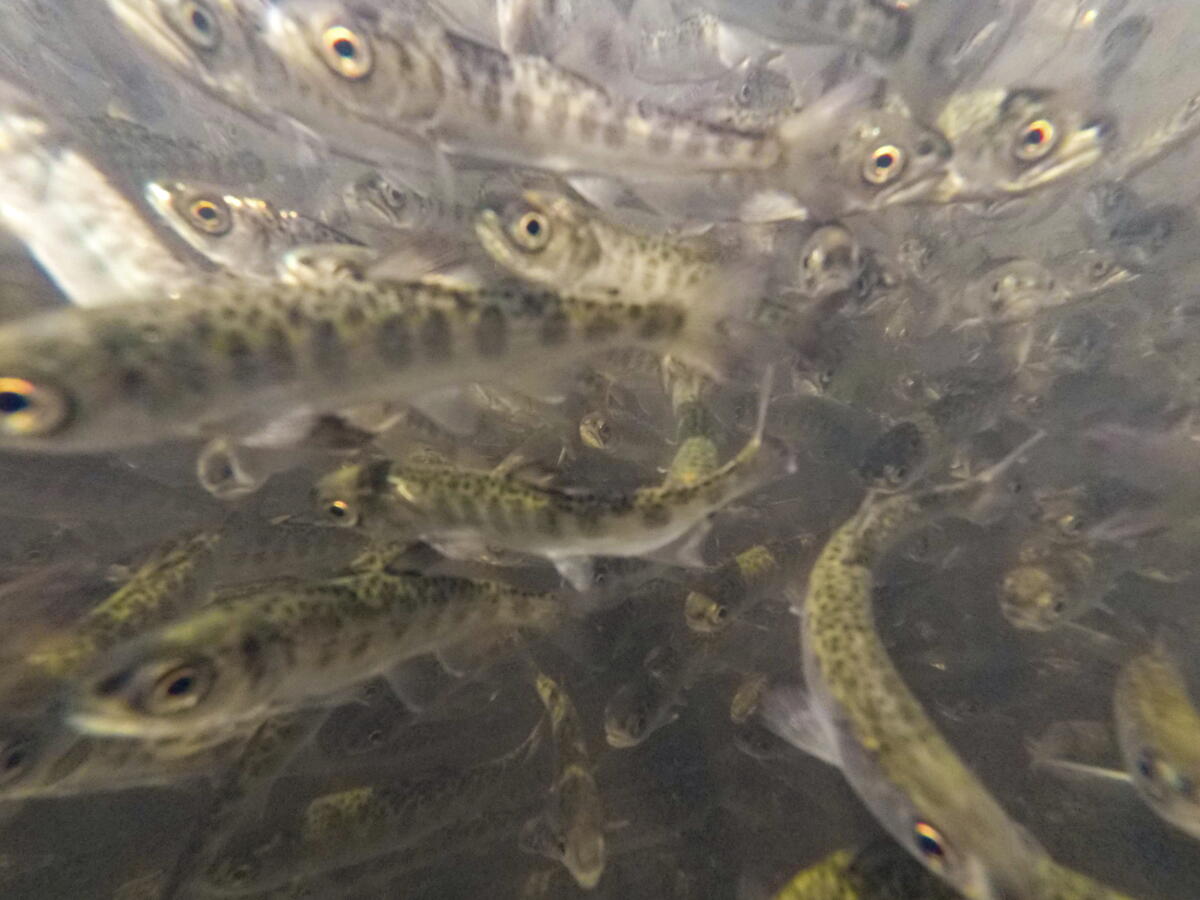
Juvenile chinook salmon in a hatchery tank. (Travis VanZant / California Department of Fish and Wildlife)
Even with more water flowing through California rivers after a relatively wet winter, environmental groups say state and federal agencies are still putting fish at risk of extinction by pumping too much water to farms and cities. Here's the latest from my L.A. Times colleague Ian James, who's been covering the fierce debate over how best to operate the enormous pumps in the Sacramento-San Joaquin River Delta, the heart of California's water-delivery system. Ian has also been covering the teardown of four dams on the Klamath River, although they aren't the only dams slated for demolition. The San Francisco Chronicle's Kurtis Alexander writes that another big teardown is in the works, and it would create the Golden State's longest free-flowing river.
Beavers can help prevent wildfire damage in certain types of California landscapes, by damming creeks to slow the flow of water, spreading moisture through floodplains and felling trees. Here's the super cool story from my L.A. Times colleague Alex Wigglesworth, which illustrates the amazing critters' handiwork north of Lake Tahoe through drone footage. Wildlife can be pretty incredible, right? For another example, check out this fascinating story by Christine Peterson for High Country News about the hundreds of miles that mule deer, pronghorn and elk travel across the American West in search of food, and about efforts to protect these increasingly tenuous migration routes from energy development and suburban sprawl.
As if we didn't have enough problems on the Colorado River, newly discovered mechanical problems at Glen Canyon Dam could make it difficult to move water downstream to California, Arizona and Nevada if reservoir levels at Lake Powell get too low. That's according to the Arizona Daily Star's Tony Davis, who reports that the dam's outlet tubes are damaged. Hopefully the U.S. Bureau of Reclamation folks can get those tubes fixed before we have to worry about it. Another Western water conflict is emerging in Nevada's slice of the Great Basin, where the lithium boom is beginning to pit mining companies against each other in the fight for precious groundwater. Daniel Rothberg examined that brewing battle for Inside Climate News.
POLITICAL CLIMATE
It's been a decade since the Bunkerville standoff between federal agents and armed anti-government activists, and the Bundy family is still illegally grazing cattle on Nevada public lands that are now part of Gold Butte National Monument. How did we get to this point, and was the standoff a precursor to the Jan. 6 insurrection at the U.S. Capitol? Jennifer Yachnin tackles those questions in an in-depth story for E&E News. Yachnin also reports that the Supreme Court has declined to take up two cases that might have offered opportunities to diminish the president's power to designate national monuments under the Antiquities Act, in lawsuits involving Cascade-Siskiyou National Monument in California and Oregon.
A new bill from California Assemblymember Laura Friedman (D-Glendale) would ban a weedkiller that's been linked to Parkinson's disease. "Paraquat is banned in more than 60 countries, including those with large agricultural economies, like the United Kingdom, China, Brazil and the members of the European Union," Friedman said, as reported by my L.A. Times colleague Hayley Smith. In another dispute involving agriculture, The Times' Susanne Rust wrote about an effort to ban large-scale animal farming in Sonoma County. Susanne explained that one activist "described birds that had lived their entire lives on wire floors, in crowded conditions, unable to right themselves after falls — because they'd never developed the muscles required to do so."
Why have so many environmental groups endorsed President Biden's reelection, even though they've criticized many of his decisions as insufficient to stem the climate crisis? "They've considered the alternative," L.A. Times Washington columnist Doyle McManus writes. That would be a return to office for former President Trump, who has pledged to do everything he can to increase fossil fuel production and make life difficult for clean energy and electric cars. Mexico's likely next president, meanwhile, is an environmental scientist who co-authored a Nobel Prize-winning climate change report in 2007. But she's expected to largely continue the pro-fossil fuel policies of her predecessor, the Associated Press' Dorany Pineda and Suman Naishadham report.
HOW WE GET AROUND
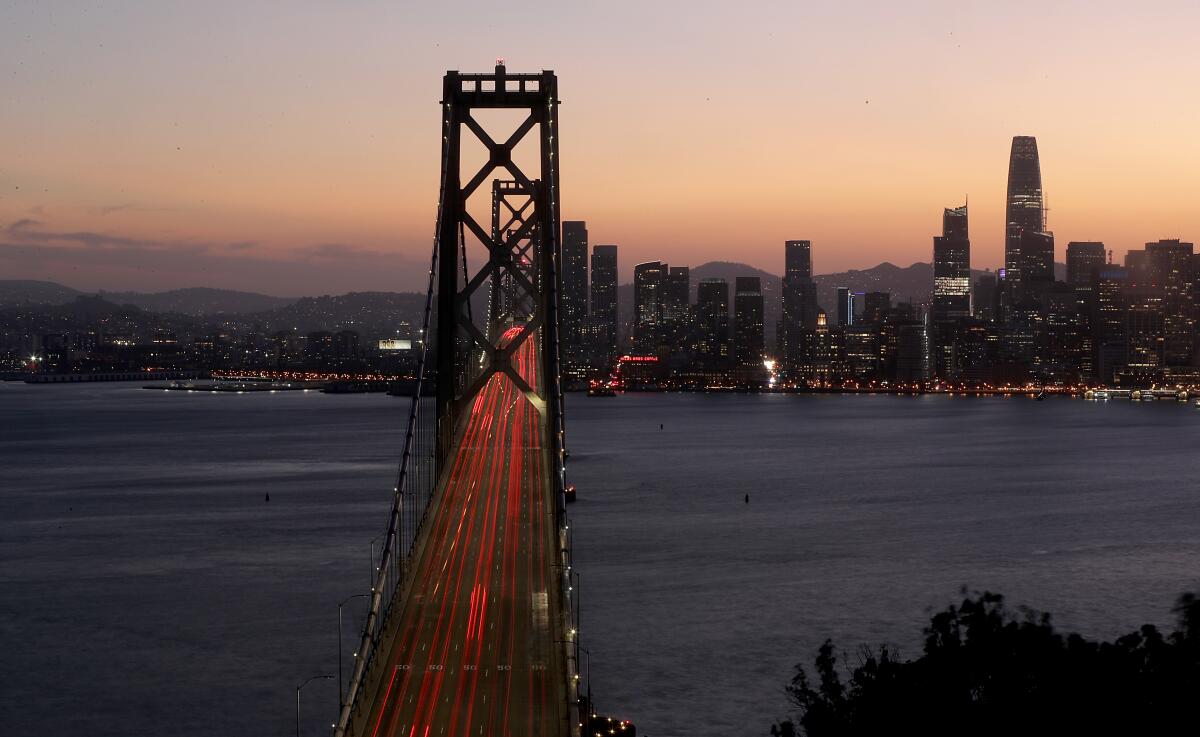
Traffic streams across the Bay Bridge in August 2020. (Luis Sinco / Los Angeles Times)
A network of air monitors has confirmed that electric cars are driving down planet-warming pollution in the Bay Area — just not fast enough to meet California's climate goals. My L.A. Times colleague Tony Briscoe has the details. It's encouraging; we just need to move faster. The Times' Laurence Darmiento, meanwhile, explored what went wrong at a vaunted electric vehicle startup that once dreamed of competing with Tesla. And in a reminder of how much power the oil industry still holds, Floodlight's Miranda Green and NPR's David Folkenflik report that Chevron has been bankrolling a local "news" outlet in a Northern California city home to one of its oil refineries for a decade — and now the company is doing the same thing in the Permian Basin.
Former Los Angeles Mayor Eric Garcetti's plan to expand the city's metro system ahead of the 2028 Olympic Games "has crumbled." So writes The Times' transportation reporter, Rachel Uranga, before explaining that the city is now scrambling to find money for buses to move people around L.A. during the Olympics. Plans for a traffic-easing public transit system at Los Angeles International Airport have also been delayed once again, my L.A. Times colleague Colleen Shalby reports. In better transit news, tunneling is complete for the Metro D Line expansion from Koreatown to the Westside, Caroline Petrow-Cohen reports.
Federal prosecutors say they've busted a crime ring that helped Californians cheat on smog tests for their cars, violating the Clean Air Act. If you had no idea this kind of thing existed, you're not alone. The defendants "polluted the air we breathe for their own profit and harmed the health of Californians," a prosecutor said. Details here from The Times' Jessica Garrison.
ONE MORE THING
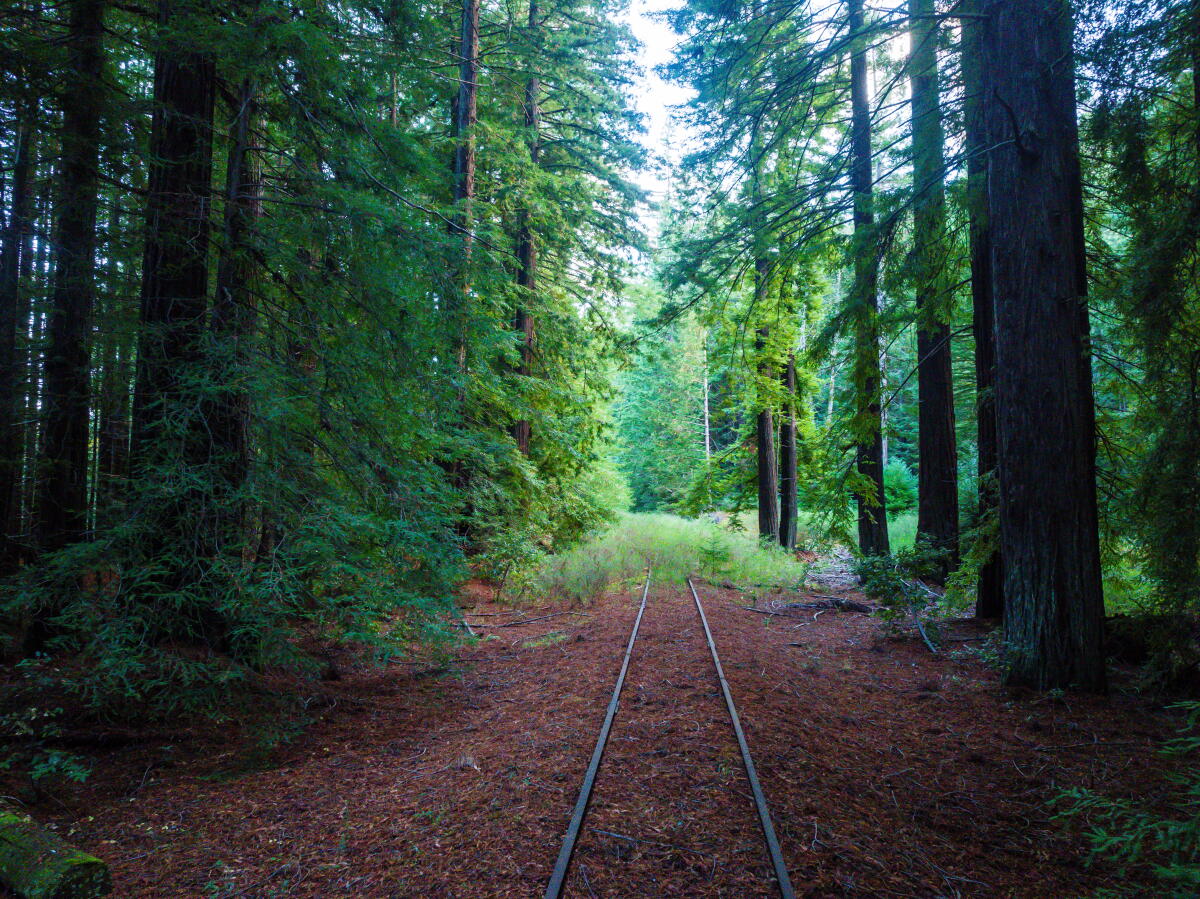
The relatively flat Great Redwood Trail would accommodate hikers, bicyclists and horseback riders. (Great Redwood Trail Agency)
Let's end on two peaceful notes, actually.
First, a Pacific Crest Trail-like experience could be coming to Northern California. The Times' Lila Seidman has a wonderful story about a 300-mile pathway through the world's tallest trees, hugging the Pacific coast, being planned along a former railway.
"It really is a magical, spiritual experience," one backer said.
Second, do you want to use less plastic and waste less food when cooking? Then check out this helpful video from Jessica Q. Chen and Maggie Beidelman, part of The Times' Your Best L.A.: Sustain series. You can find previous videos in the series here.
We'll be back in your inbox Thursday. To view this newsletter in your web browser, click here. And for more climate and environment news, follow @Sammy_Roth on X.